
Sledujte novinky a inovace společnosti WXING.
When most people think of cold heading, they picture standard fasteners: hex bolts, screws, rivets. But limiting this process to off-the-shelf hardware dramatically underestimates its potential. The short answer is yes — cold heading is not only compatible with custom part production, in many scenarios it is the best process available for achieving tight tolerances, high strength, and low per-unit cost at scale.
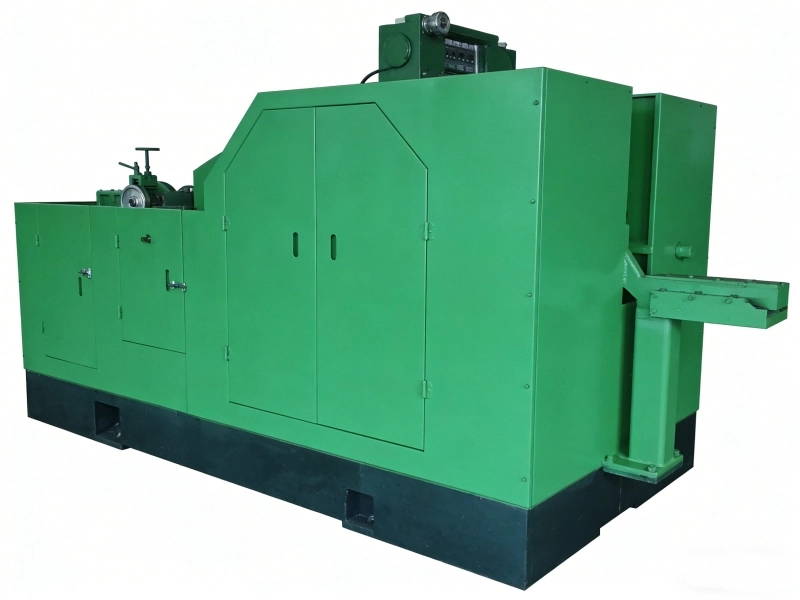
Cold heading is a high-speed metalworking process in which wire or rod stock is shaped by dies under extreme compressive force — without heat. The metal deforms plastically, flowing into the geometry defined by the tooling. Unlike machining, which removes material, cold heading compresses and redirects metal grain flow, producing parts with superior mechanical properties and virtually no waste.
| Industry | Typical Custom Parts | Key Requirement |
|---|---|---|
| Automotive | Axle pins, ball studs, drivetrain shafts | Fatigue strength, tight tolerances |
| Medical | Bone screws, implant pins | Biocompatible alloys, micro-precision |
| Electronics | Terminal pins, contact housings | Conductivity, miniaturization |
| Aerospace | Structural fasteners, locking inserts | Strength-to-weight, reliability |
Incorporate generous transition radii at all diameter changes. A minimum of 0.3mm at shoulder transitions significantly extends tool life and improves part integrity.
If a thread can be rolled rather than cut, or a bore punched rather than drilled, incorporate these into the cold heading process to reduce cost and lead time.
Process engineers can identify geometry modifications that simplify tooling — changes trivial on the drawing but transformative in production economics.
Cold heading is one of manufacturing's most powerful tools for custom precision parts. When applied to the right geometry, material, and volume, it delivers dimensional accuracy, mechanical performance, and cost efficiency that few alternatives match. The key questions are simple: Does volume justify tooling investment? Is the material ductile? Can the geometry be formed practically? If yes — cold heading deserves serious consideration.
Start with a DFM review — share your drawing with us and ask about formability and tooling costs.