
Sledujte novinky a inovace společnosti WXING.
For fastener manufacturers, choosing a three-station cold heading machine mainly comes down to two questions: Can it produce the target fastener, and can it meet the required production volume?
A three-station cold heading machine performs multiple forming operations in sequence, making it suitable for batch production of standardized fasteners. However, rated speed is not the same as actual output. Product size, material, tooling, and operating conditions can all affect production efficiency.
A three-station cold heading machine is an automated cold forming machine with three forming stations, also known as a 3 Die 3 Blow cold heading machine.
Metal wire is automatically fed and cut before being transferred between stations for successive forming operations. With suitable tooling, the machine can produce fastener heads and other features while maintaining continuous production.
Three-station machines are mainly suited to fasteners with relatively established forming processes and stable production volumes.
Hex bolts are a common application. Multiple heading operations can be completed in sequence to form the bolt head, supporting efficient batch production.
Some socket head cap screws can also be produced on three-station equipment. Suitability depends on the product's diameter, length, head design, material, and tooling requirements.
Certain nuts and other metal fasteners can also be formed using three stations. Products requiring more forming operations may need four-station or multi-station equipment.
The right number of stations should therefore be determined by the actual forming process, rather than simply choosing a machine with more stations.
Production speed is an important specification, but it should not be treated as guaranteed output.
The WXING three-station cold heading machine series includes multiple models designed for different fastener sizes and production requirements.
| Technical Parameter | Range |
| Forming stations | 3 |
| Production speed | 60–240 pcs/min |
| Suitable bolt diameter | Approx. 3–13 mm |
| Max. cut-off diameter | 15 mm |
| Max. cut-off length | 250 mm |
| Max. upsetting force | 115,000 kg |
These figures cover different models. Actual production output depends on the specific product, material, tooling, feeding stability, setup, and maintenance conditions.
Before purchasing a three-station cold heading machine, focus on four factors.
Check the fastener diameter, length, head dimensions, and wire specifications against the machine's processing range.
Determine how many forming operations are needed. If the product can be efficiently formed within three stations, a three-station machine may be suitable. More complex products may require additional stations.
Do not calculate capacity only from the maximum pieces-per-minute rate. Consider actual running speed, machine utilization, setup time, and maintenance when estimating output.
Material properties and die design directly affect the forming process. A product-specific evaluation can help confirm whether the machine and tooling are suitable.
For detailed model specifications, review the three-station cold heading machine and compare the machine range with your fastener requirements.
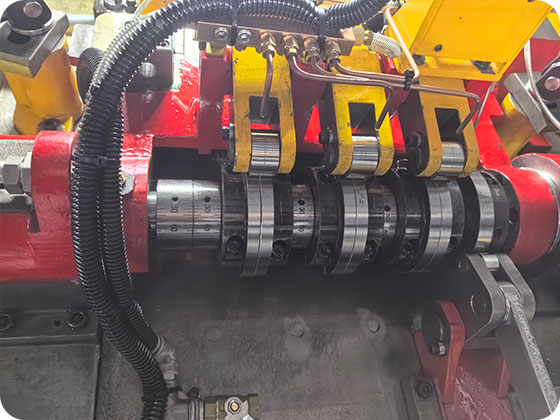
A three-station cold heading machine is well suited to automated, high-volume production of selected standardized fasteners such as hex bolts and socket head cap screws.
For buyers, the best machine is not necessarily the one with the highest rated speed. Product dimensions, forming operations, tooling, and actual production targets should be considered together to achieve stable and efficient production.