
Sledujte novinky a inovace společnosti WXING.
Cold heading is a common metal forming process widely used for the mass production of bolts, screws, nuts, rivets, and other fasteners. During the cold heading process, metal wire is formed at room temperature under the force of punches and dies, creating the required head, shank, or other structures.
Throughout the production process, the cold heading die not only determines the basic shape of the product but also affects dimensional accuracy, material flow, production efficiency, and die service life.
Throughout the production process, the cold heading die not only determines the basic shape of the product but also affects dimensional accuracy, material flow, production efficiency, and die service life.
The die structure varies depending on the product and equipment, but common cold heading dies mainly include dies and punches.
The die provides the forming cavity and controls the deformation of the material, while the punch applies pressure to the wire, forcing it into the die cavity for plastic deformation. On a multi-station cold heading machine, different dies can be used at different stations to complete upsetting, extrusion, and forming operations step by step.
The die cavity provides the forming space for the metal material, allowing the wire to deform according to the product design. For example, hexagonal, cylindrical, and other special bolt head shapes are formed using corresponding dies.
The dimensions of the die cavity, machining accuracy, and installation condition all affect the final dimensions of cold-headed parts. As the die wears, dimensional deviations, eccentricity, or burrs may occur. Therefore, fasteners with higher precision requirements require high-quality dies.
Cold heading is essentially a process in which material is redistributed under pressure. A properly designed die can guide the material in the desired direction and reduce forming defects such as incomplete filling, folding, and localized stress concentration.
Cold heading is mainly used for high-volume, continuous production, where consistent product dimensions and appearance are required. A stable die can reduce forming variations and defective products while improving production consistency.
A properly designed cold heading die can work with high-speed equipment for continuous forming. Since cold heading mainly relies on plastic deformation rather than extensive material removal, it can reduce material waste and improve material utilization.
By adjusting the die structure and forming method, cold heading can be used not only for standard screws and bolts but also for precision parts with different sizes and designs, allowing the process to meet a wider range of production requirements.
Cold heading dies do not work independently. Their design is closely related to the cold heading machine, raw material, forming sequence, and product structure.
This is especially important in multi-station cold heading. Different stations perform different forming operations. If the machine capacity, die design, and forming sequence are not properly matched, die loads may increase and product quality and production stability may be affected.
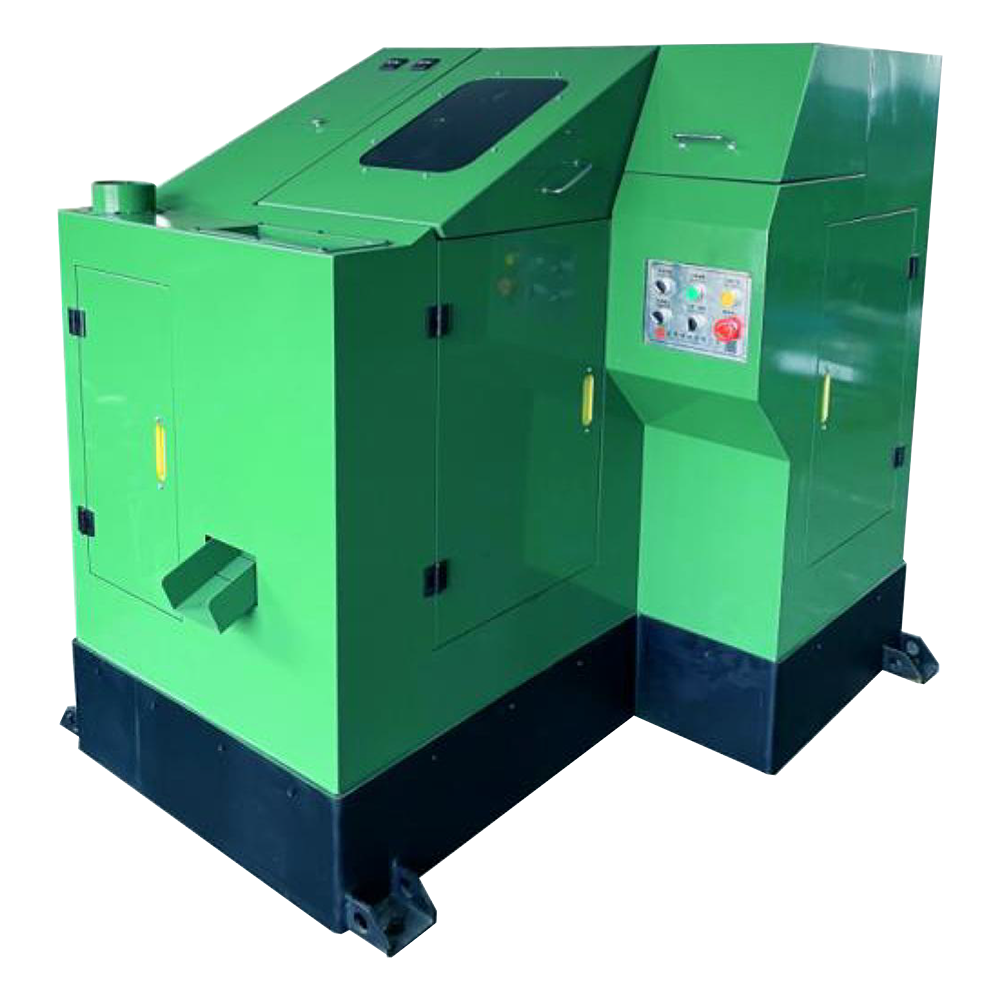
Cold heading dies are exposed to repeated impact loads and stress during production. Common causes of wear and cracking include:
Friction and wear: Oxide scale, iron particles, and other contaminants on the raw material can increase friction and gradually wear the die cavity.
Improper material selection: Insufficient hardness, toughness, or wear resistance can cause premature die wear or cracking.
Poor structural design: Sharp corners, insufficient wall thickness, and localized stress concentration can increase the risk of cracking.
Insufficient lubrication: Poor lubrication, unsuitable lubricant selection, or blocked lubrication lines can increase friction between the metal and die.
Improper machine adjustment: Misalignment between the punch and die or irregular feeding can cause uneven loading on the die.
Delayed maintenance: Continuing to use a die after significant wear can lead to dimensional changes in the product and reduce production stability.
Extending the service life of a cold heading die requires proper control of material selection, die design, lubrication, and equipment maintenance.
First, select suitable die materials according to the workpiece material and forming sequence, and optimize the die structure to reduce stress concentration. During production, maintain stable lubrication and regularly inspect the punch, die, and equipment installation.
For multi-station cold heading production, the forming load should also be properly distributed among different stations to prevent a single die from carrying excessive deformation loads. This helps reduce abnormal wear and maintain stable production.